


Add some spirit to your usual sangria
Table of Contents
Why Your Summer Punch Needs a Modern Makeover
Sangria. The name alone conjures images of sun-drenched Spanish terraces, lively gatherings, and jugs beaded with condensation. For centuries, this humble mix of wine and fruit has been a symbol of relaxed, communal enjoyment. Its journey began with the Romans, who, needing to make water safe to drink, fortified it with wine and spices. Over time, this practical necessity evolved into the party favourite we know and love today.
But let's be honest. Sometimes, the classic red-wine-and-brandy combination can feel a little… predictable. It’s a reliable choice, but is it an exciting one? We believe in a “Modern Traditionalist” approach: respecting the roots of a classic whilst courageously embracing bold new flavours. It’s about understanding what makes sangria great—its refreshing, fruity character—and asking, “How can we make it even better?”
The answer lies in the “twist.” Adding a carefully chosen spirit or, even better, a craft liqueur, doesn’t just add alcohol; it fundamentally changes the drink's structural integrity. It introduces new layers of aroma, flavour, and complexity, transforming a simple punch into a memorable craft cocktail experience.
Moving Beyond the "Red Syrup" Reputation
We’ve all had a disappointing sangria. That overly sweet, cloying punch that tastes more like fruit squash than a sophisticated drink. This usually happens for a couple of key reasons. Firstly, the temptation to mask a cheap, unpleasant wine with heaps of sugar and juice is a common pitfall. The old adage “garbage in, garbage out” applies just as much to cocktails as it does to cooking. A great sangria starts with a decent, drinkable wine.
Secondly, the choice of spirit is crucial. Simply dumping in a harsh, mass-produced spirit can create an unpleasant alcoholic “burn” that overpowers the delicate notes of the fruit and wine. The secret to a truly exceptional sangria lies in the balance of acidity (from the wine and citrus), sweetness (from the fruit and liqueur), and the warmth of the alcohol. Get that right, and you’re on your way to creating something special.
The Psychology of a Great Sangria Twist
Imagine hosting a garden party. You bring out a jug of sangria, and your guests expect the usual. But when they take their first sip, they’re met with a delightful surprise—a subtle hint of elderflower, a burst of fresh peach, or the delicate sweetness of strawberry. That’s the moment your gathering becomes a memorable experience.
A unique twist allows you to create a “signature” house sangria, something your friends will talk about and ask for again and again. Using sensory language helps build that story. Is your sangria “a taste of an English summer garden,” with notes of strawberry and elderflower? Or is it a “sun-ripened orchard in a glass,” bursting with peach and honey? This is where British craft spirits and liqueurs truly shine, offering unique and authentic flavour profiles that can elevate your punch from standard to stunning.
The Secret Ingredient: Why Craft Liqueurs Are the Ultimate Sangria Twist
When most people think of adding a kick to their sangria, their minds jump to brandy. It’s the traditional choice, but we think there’s a much more exciting and versatile option: craft liqueurs. A liqueur-based sangria uses a premium fruit or floral liqueur to add a targeted, vibrant flavour boost that complements, rather than overpowers, the wine and fruit.
Think of it this way: instead of a generic alcoholic warmth, you’re infusing your sangria with the very essence of a specific flavour. A high-quality peach liqueur doesn’t just taste vaguely of peach; it captures the authentic, juicy sweetness of the fruit itself. This allows for a level of precision and sophistication that simple sugar syrup or a heavy-handed glug of brandy can never achieve. It’s the difference between a good drink and a truly great one.
The Liqueur Advantage
The beauty of using small-batch liqueurs is their authenticity. Unlike artificially flavoured syrups, our liqueurs are crafted to deliver a true, vibrant fruit flavour that tastes fresh and natural. This means you can create a sangria that is bursting with character without it becoming sickly sweet. They integrate seamlessly with the wine, enhancing its natural notes and creating a more harmonious blend.
The possibilities are endless. You can pair a delicate, floral elderflower liqueur with a crisp white wine for an elegant, aromatic punch. Or, you could boost the berry notes in a rosé with a splash of rich strawberry liqueur. This approach gives you complete creative control, allowing you to tailor your sangria perfectly to the occasion, the season, or even the food you’re serving.
Spiced Rum vs. Liqueurs: A Quick Comparison
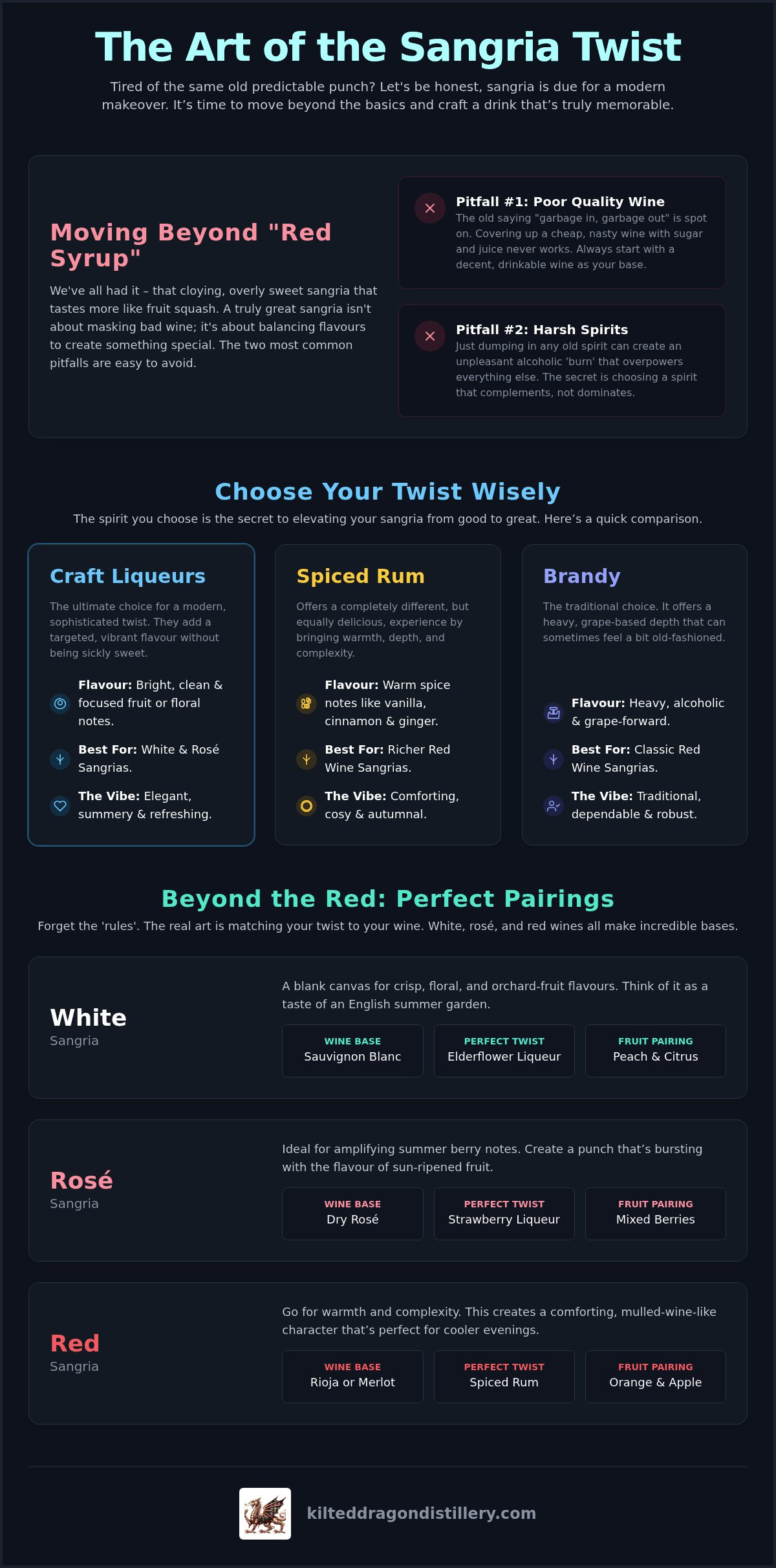
Of course, liqueurs aren’t the only way to twist your sangria. Spiced rum, like our own The Fire Dragon, offers a completely different but equally delicious experience. Where liqueurs provide a bright, focused fruit or floral note, spiced rum brings warmth, depth, and complexity with hints of vanilla, cinnamon, and ginger. It’s a fantastic choice for an autumnal red wine sangria, creating a comforting, mulled-wine-like character.
Liqueurs: Offer a sweet, clean, and focused fruit or floral flavour. Perfect for light, summery, and refreshing white or rosé sangrias.
Spiced Rum: Provides warmth, spice, and aromatic depth. An excellent choice for richer red wine sangrias, especially in cooler weather.
Brandy: The traditional option, offering a heavy, grape-based depth that can sometimes feel a bit old-fashioned.
For a daytime garden party or a light, elegant aperitif, the targeted flavour and approachable nature of a craft liqueur is often the perfect choice.
Beyond the Red: Crafting Perfect White, Rosé, and Red Sangria Twists
The first rule of modern sangria is that there are no rules. Forget the notion that it has to be made with red wine. The real art lies in matching your spirit or liqueur twist to the colour, body, and character of your chosen wine. White, rosé, and even sparkling wines make incredible bases for sangria, opening up a whole new world of flavour combinations.
White Wine Sangria: A blank canvas for crisp, floral, and orchard-fruit flavours. Think Sauvignon Blanc or Pinot Grigio.
Rosé Sangria: Perfect for enhancing delicate red berry notes. A dry rosé from Provence is an ideal starting point.
The Perfect White Sangria: Peach, Honey & Elderflower
There is something undeniably lovely about a white wine sangria, especially when it’s crafted with care. It’s lighter, more refreshing, and incredibly versatile. To create a truly sublime white sangria, we recommend moving away from generic sweetness and towards specific, complementary flavours.
A high-quality peach liqueur is a game-changer here. It infuses the wine with the flavour of sun-ripened orchards, creating a drink that is both sophisticated and wonderfully easy to drink. Pair it with a crisp Sauvignon Blanc and slices of fresh white peach and nectarine. For a touch more sweetness and depth, a small drizzle of honey can bridge the gap between the fruit and the wine beautifully. To elevate it further, add a splash of elderflower liqueur. This introduces a delicate, floral aroma that is quintessentially British and adds a layer of elegant complexity.
Vibrant Rosé & Red Sangrias: Strawberry & Lemon
Rosé sangria is the heart of any good garden party. Its beautiful pink hue and light body make it a natural crowd-pleaser. The key is to enhance its natural berry notes without overwhelming them. A rich, authentic strawberry liqueur is the perfect partner for a dry rosé. It amplifies the fresh fruit character and adds a luxurious sweetness that makes the whole drink sing. Garnish with fresh strawberries, raspberries, and a few mint leaves for a picture-perfect punch.
For a classic red sangria, a twist of citrus can work wonders. Whilst oranges are traditional, a sharp and zesty lemon liqueur can cut through the richness of the red wine, adding a brilliant brightness and stopping the drink from becoming too heavy. It balances the deep flavours of dark fruits like cherries and plums, creating a more refreshing and dynamic finish.
For the Adventurous: Gin and Agave Twists
If you’re feeling truly experimental, why stop at liqueurs? A botanical-rich gin can bring an entirely new dimension to your sangria. A splash of a quality pink gin in a white or rosé sangria can add herbaceous and floral layers that are both surprising and delightful.
For a genuinely daring twist, consider the smoky, earthy notes of an agave spirit. A small amount of a smoked agave spirit, like our Welsh Celtic Rebel, in a red wine sangria with grilled pineapple and lime creates a complex, savoury, and unforgettable punch. It’s a bold move, but one that proves just how far the humble sangria can be pushed. To learn more about this growing category, explore the world of UK agave spirits.
How to Build a Better Sangria: The Distiller’s Golden Rules
Creating a distiller-grade sangria at home isn’t about complicated techniques; it’s about following a few simple but crucial steps. It’s a process that respects the ingredients and understands that patience is just as important as the recipe itself. Forget the simple “dump and stir” method; this approach builds layers of flavour for a truly integrated and professional-tasting result.
Step 1: The Maceration — This is the most important step. It involves soaking your prepared fruit in your chosen liqueur or spirit and a little sweetener (if needed) for several hours. This process, called maceration, draws the flavour out of the fruit and infuses it into the alcohol.
Step 2: The Wine Choice — Select a good quality, dry, fruit-forward wine that you would happily drink on its own. A cheap, bitter wine will result in a cheap, bitter sangria. The wine is the backbone of the drink, so choose wisely.
Step 3: The Chill — Once you combine the macerated fruit and spirit with the wine, you need to let it chill. This is where the magic happens. The flavours meld, soften, and integrate. A minimum of four hours in the fridge is essential, but overnight is even better.
Step 4: The Finish — Add any sparkling mixers, like soda water or prosecco, and fresh, delicate herbs like mint or basil right at the last minute. Adding them too early will cause them to lose their fizz and flavour.
The Art of Maceration
Why is maceration so non-negotiable for a top-tier sangria? It’s all down to science. The alcohol in the spirit or liqueur acts as a solvent, effectively extracting the aromatic oils and deep-seated flavours from the fruit in a way that wine alone cannot. Soaking your fruit for at least 4 hours (and up to 12) in your chosen spirit is the secret to creating a punch with real depth and character.
When choosing your fruit, consider its structure. Harder fruits like apples and citrus hold their shape well and can be added early on. Softer fruits like raspberries, peaches, and strawberries will release their flavour beautifully but can break down if left too long, so you might add them in the last couple of hours of chilling. Citrus is essential for providing acidity and brightness—don’t skip it!
Ratios and Dilution
Whilst recipes vary, a good starting point for the “Golden Ratio” is: 1 bottle of wine (750ml) to 125-150ml of liqueur/spirit to 250ml of mixer. You can adjust this based on the strength of your spirit and your personal taste, but it’s a solid foundation.
One of the biggest mistakes people make is diluting their masterpiece with ice. Never put ice inside the jug or punch bowl. It will melt and make your sangria watery and weak. Instead, fill each individual glass with plenty of ice and pour the chilled sangria over it. This keeps the main batch pristine and ensures every glass is perfectly cold. For the final touch, a splash of sparkling water, lemonade, or ginger ale just before serving can add a refreshing lift and a delightful fizz.
Elevate Your Next Gathering with Kilted Dragon Spirits
Sangria is more than just a drink; it's a canvas for creativity. By choosing small-batch, UK-made spirits and liqueurs, you’re not just making a better-tasting punch—you’re supporting the craft revolution and bringing a story of passion and quality to your table. Whether it’s the sun-kissed taste of our Peach Liqueur or the warm embrace of The Fire Dragon Spiced Rum, the right spirit is your secret weapon for turning any recipe into something extraordinary.
The difference lies in the quality. Artisanal production means a more enjoyable, nuanced flavour and a smoother finish, leading to a more pleasant hosting (and drinking) experience. You’re not just mixing a drink; you’re bringing the dedication and passion of our distillery into your own back garden or dining room.
Small Batch, Big Flavour
There’s a world of difference between mass-produced spirits and the excellence that comes from a traditional copper pot still. Our meticulous, small-batch process allows us to create spirits and liqueurs with unparalleled smoothness and depth of flavour. Our unique blend of Welsh and Scottish heritage inspires our innovative flavour pairings, resulting in a range that is both rooted in tradition and excitingly modern.
We invite you to explore our full range of spirits and find the perfect twist for your next creation. Sangria is a canvas; make sure you’re using the best paint. Discover the perfect bottle in our collection of Kilted Dragon Liqueurs and spirits today.
Planning Your Next Craft Adventure
Looking for the perfect present for the cocktail lover in your life? A bottle of our craft liqueur or a gift set makes an inspired choice. For a truly unforgettable experience, why not give the gift of knowledge with a distillery tour voucher? It’s a wonderful way to share the passion behind the process.
For more inspiration on how to use our spirits and develop your own creative pairings, we recommend exploring The Art of Flavour: A Guide to Innovative Spirit Pairings. Your journey into the world of craft cocktails is just beginning.

Comments