


Cooking with Rum Recipes: The Ultimate Guide to Spirited Culinary Craft
If you've ever thought that bottle of rum gathering dust on your drinks trolley was only good for a cocktail, we've got some delicious news for you. Cooking with rum is one of the oldest tricks in the culinary book, a secret weapon for adding incredible depth, sweetness, and spice to everything from sticky pork ribs to decadent chocolate cakes. It’s about transforming good food into something truly memorable.
But how do you actually use it without making every dish taste like a party drink? That’s the big question, and we’re here to answer it. Forget the fear of overpowering your food or not knowing which type of rum to choose. This guide is your new best friend in the kitchen, showing you how to use rum as the ultimate "liquid spice" – a single ingredient that brings acidity, sugar, and complex aromatics to the table. Get ready to unlock a whole new world of flavour.
Table of Contents
The Art of Cooking with Rum: Why It's a Kitchen Essential
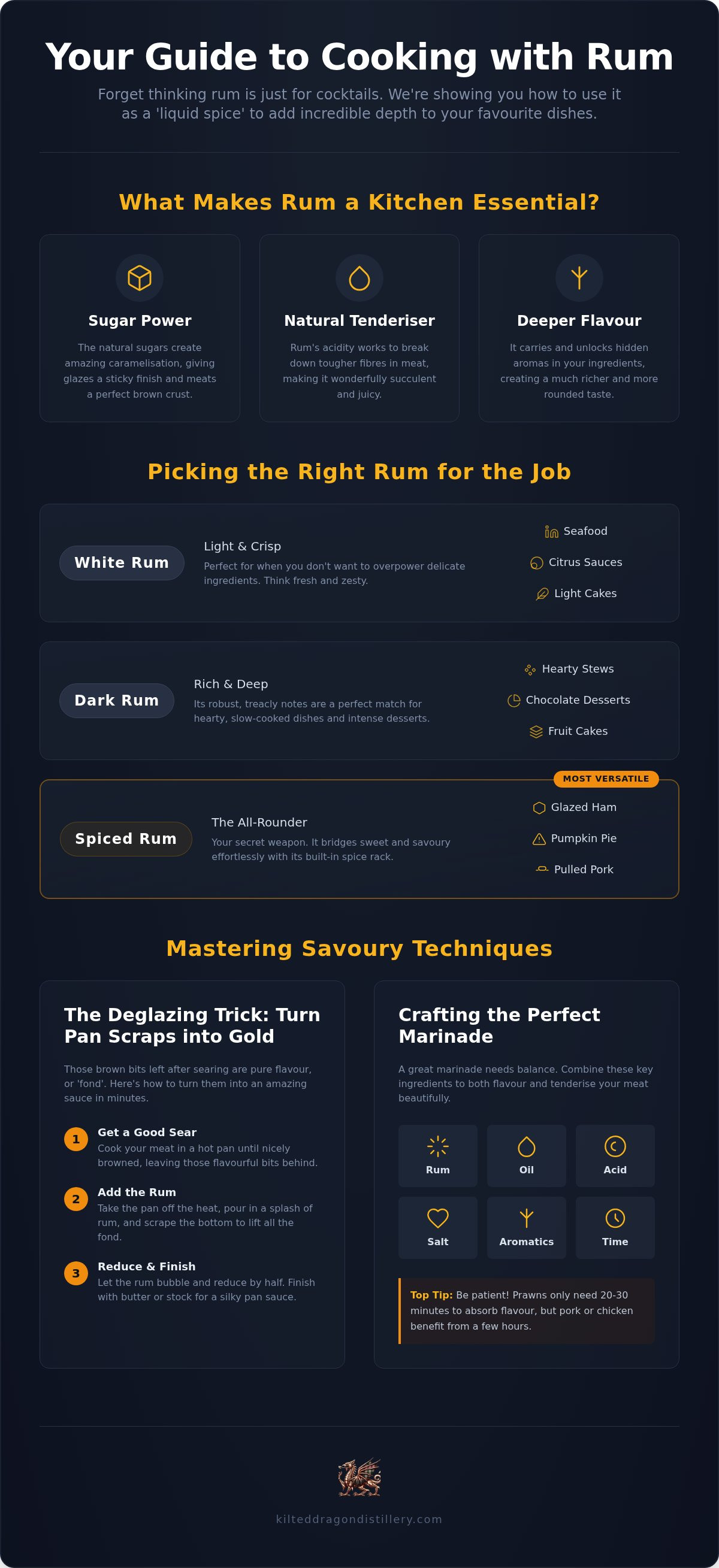
So, what’s the big deal about splashing a bit of rum into your saucepan? It’s not just about adding a boozy kick. A good quality rum brings a trio of powerhouse elements to your cooking: sugar, acidity, and a host of aromatic spices. These work together to create layers of flavour you simply can't get from anything else.
Think about it: the natural sugars in rum, often from molasses or sugarcane, help create beautiful caramelisation. This is what gives glazes that gorgeous sticky finish and meats that perfect brown crust. At the same time, it acts as a natural tenderiser, breaking down tougher fibres in meat to make it wonderfully succulent. It’s a shortcut to flavour that chefs have used for centuries.
White Rum: Light and crisp, this is your go-to for delicate dishes. Think seafood, citrus-based sauces, or light and airy cakes.
Dark Rum: Rich, deep, and full of molasses flavour, dark rum is perfect for hearty stews, rich chocolate desserts, and classic fruit cakes.
Spiced Rum: This is the versatile all-rounder. A well-crafted spiced rum like The Fire Dragon comes with its own built-in spice rack, adding warmth and complexity to both savoury and sweet recipes.
What Rum Actually Does to Your Food (The Science Bit, Made Simple)
Ever wondered why a splash of alcohol can make a dish sing? It all comes down to a bit of kitchen chemistry. Alcohol is a fantastic carrier for flavour molecules that things like water and fat can't dissolve on their own. It unlocks hidden aromas in your ingredients, spreading them throughout the dish for a richer, more rounded taste.
It also plays a key role in the Maillard reaction – that’s the fancy term for the browning process that creates so much flavour when you sear meat or roast vegetables. The sugars in rum accelerate this process, giving you a deeper, more complex crust. When you use a spiced rum, you're getting a double win: all the benefits of the alcohol plus a perfectly balanced blend of spices, saving you time and effort.
Choosing Your Spirit: White vs Dark vs Spiced
Picking the right rum is a bit like choosing the right tool for a job. Each type brings something different to the party, and knowing when to use each one will make you a much more confident cook.
For light and fresh flavours: Grab a white rum. Its clean profile won't overpower delicate ingredients like prawns, scallops, or chicken. It's brilliant in a lime and rum marinade for fish tacos or a light syrup for a fruit salad.
For deep and rich dishes: Dark rum is your best bet. Its robust, treacly notes are a perfect match for slow-cooked beef stews, BBQ sauces, and intensely chocolatey brownies. It's the soul of a traditional Christmas pudding.
For maximum versatility: A quality spiced rum is the secret weapon. It bridges the gap between sweet and savoury effortlessly. Use it to glaze a ham, spice up a pumpkin pie, or add a warm kick to a banana bread recipe. A bottle of The Fire Dragon, for instance, gives you notes of vanilla, cinnamon, and subtle spice that work just as well with pulled pork as they do with a rum baba.
Mastering Savoury Rum Techniques: From Marinades to Deglazing
While rum in a cake is a familiar friend, its true power often shines in savoury cooking. It has a natural affinity for pork, poultry, and even seafood, cutting through richness and adding a sweet, smoky complexity that is simply irresistible. Once you master a few basic techniques, you'll find yourself reaching for it time and time again.
The key is learning how to control its flavour. Whether you're creating a deep, penetrating marinade or a quick, glossy pan sauce, the goal is to enhance the food, not overwhelm it. We’ll show you how to create a sticky, perfect glaze and how to use rum to capture every last bit of flavour from your pan.
The Deglazing Technique: Turning Pan Scraps into Gold
You know those little brown bits that get stuck to the bottom of the pan after you've seared a steak or some chicken? That's not burnt stuff to be scrubbed away – that's concentrated flavour, known as "fond." Deglazing with rum is the easiest way to lift all that goodness and turn it into a silky, delicious sauce in minutes.
Step 1: Get a good sear. Cook your meat or vegetables in a hot pan until they're nicely browned, leaving those flavourful bits behind. Remove the meat from the pan and set it aside.
Step 2: Add the rum. Take the pan off the heat for a moment (this is important for safety!) and pour in a good splash of rum. Return it to a lower heat and use a wooden spoon to gently scrape the bottom of the pan. You'll see all those bits lift off and dissolve into the liquid.
Step 3: Reduce and finish. Let the rum bubble away and reduce by about half. This cooks off the harsh alcohol taste and concentrates the flavour. You can then stir in a knob of butter, a splash of stock, or a bit of cream to finish your instant pan sauce.
Crafting the Perfect Spiced Rum Marinade
A marinade does two things: it flavours and it tenderises. Rum is brilliant at both. Its acidic properties help to break down protein fibres, whilst its complex flavour seeps deep into the meat.
Find the right balance: A great marinade needs a balance of ingredients. Combine your rum with oil (to carry flavour), an acid like lime juice or vinegar (to tenderise), and salt (to help the marinade penetrate). Don't forget other aromatics like crushed garlic, ginger, or herbs.
Give it time: How long you marinate depends on the protein. Prawns only need about 20-30 minutes, chicken pieces a few hours, and tougher cuts of beef or pork can be left overnight for maximum impact.
Why The Fire Dragon works so well: Our spiced rum already contains a beautiful blend of spices, so it does a lot of the heavy lifting for you. Its warm notes are a natural match for BBQ flavours, pairing perfectly with smoked paprika, chilli, and a touch of brown sugar for the ultimate sticky marinade.
Elevating Desserts: How to Flambé and Bake with Spirit
Rum and sugar are a match made in heaven. From boozy-soaked fruit cakes to the dramatic flair of a flambé, adding a spirit can turn a simple dessert into a showstopper. A spiced rum, in particular, adds a layer of sophistication that cuts through sweetness and introduces warm, aromatic notes.
Learning how to incorporate it properly is key. You don't want a soggy cake or a raw, alcoholic-tasting sauce. The goal is to capture the rich essence of the rum while letting the harshness of the alcohol burn away, leaving behind pure, concentrated flavour.
The Flambé Guide: Safety and Showmanship
Flambéing looks impressive, but it's surprisingly simple and safe if you follow a few golden rules. The technique is used to burn off the alcohol quickly, leaving the rum's delicious flavour behind. It's perfect for dishes like Bananas Foster or Christmas pudding.
Safety first, always: Before you start, make sure there's nothing flammable nearby. Turn off any extractor fans, as they can draw the flames upwards. Always have a large pan lid handy that you can use to smother the flames if needed.
Warm the spirit: Gently warm about 60-80ml of rum in a small saucepan over a low heat. You just want it warm, not hot or boiling. This helps it ignite easily.
Light with care: Take the pan off the heat before you light it. Use a long-reach lighter or a long match to ignite the surface of the rum, keeping your face and hands well back. The flame will burn for a minute or so. Gently swirl the pan until the flames die out on their own. That's it! You're left with a beautifully flavoured, non-alcoholic syrup.
Baking with Rum: Infusing Sponges and Ganaches
Adding rum to your bakes can enhance flavour and improve texture, but it's all about how and when you add it.
In the batter: A tablespoon or two of rum in a cake batter can add a subtle warmth and extra moisture. It pairs especially well with chocolate, vanilla, and fruit flavours. Don't add too much, as it can affect how the cake rises.
As a syrup: One of the best ways to get a rich rum flavour is to make a simple syrup. Just heat equal parts sugar and water until the sugar dissolves, then stir in your rum off the heat. You can then brush this syrup over a warm sponge cake as it comes out of the oven. The cake will absorb the liquid, becoming incredibly moist and flavourful. Check out our guide to spiced rum dessert recipes for more inspiration.
With chocolate: Rum and chocolate are a classic pairing for a reason. The deep, warm notes of a dark or spiced rum elevate the rich flavour of cocoa. Try adding a splash of rum to your next chocolate ganache or truffle mixture for a truly decadent treat.
Essential Tips for Balancing Flavours in Rum Recipes
You’ve got the techniques down, but now for the artistry: balancing the flavours. The most common mistake when cooking with rum is using too much, too late, resulting in a harsh, boozy taste. The secret is to treat it like any other powerful ingredient – with a little respect and an understanding of how it interacts with heat and time.
It's also about knowing what flavours work well with rum. Its inherent sweetness needs to be balanced with salt, acid, or heat. And remember, the dish you cook is only half the story; pairing it with the right drink can elevate the entire experience.
The Golden Rule of Timing
When you add the rum is just as important as how much you add. Adding it early in the cooking process allows the alcohol to cook off, leaving a subtle, mellow background note. Adding it at the end will give you a much bolder, more pronounced rum punch.
For a subtle note: Add rum at the beginning with your other liquids, like in a stew or a slow-cooked sauce.
For a bold punch: Stir it into a sauce or glaze right at the end, or use it in a non-cooked item like a frosting or a truffle filling.
The flavour peak: As a general rule, the flavour of rum in a cooked sauce reaches its peak after about 10 minutes of gentle simmering.
Complementary Ingredients for Spiced Rum
Spiced rum is incredibly versatile, and it plays well with a huge range of other ingredients. Think of these as a starting point for your own culinary experiments:
Fruits: Pineapple is a classic for a reason! But also try banana (especially caramelised), apple, pear, orange, and mango.
Spices: The spices already in the rum love company. Ginger, cinnamon, clove, nutmeg, and star anise are all fantastic partners.
Savoury Friends: For savoury dishes, think about garlic, soy sauce, lime, and smoked chillies. These create a wonderful sweet, salty, and spicy balance.
The Perfect Mixer: Don't forget what you're drinking alongside your meal. A fiery ginger beer is the ultimate companion to a rum-glazed dish. For tips on finding the perfect one, explore our 2026 ginger beer pairing guide.
The Spirited Kitchen: What About Gin, Vodka, and Agave?
While we've focused on the rich, warm world of rum, the trend of cooking with spirits is exploding, with home cooks and chefs alike raiding the entire drinks cabinet for flavour. Looking ahead to 2026, using gin, vodka, and even agave spirits in the kitchen is set to become just as common. Each spirit brings its own unique personality to the table.
Gin: The complex botanicals in gin can add an incredible aromatic, herbal layer to dishes. A splash in a tomato sauce can brighten it up, while its juniper notes are fantastic with gamey meats like duck or venison. You can even use it to cure fish, like in a gin-cured salmon gravlax.
Vodka: Known for its neutrality, vodka is a secret weapon for texture and flavour enhancement. It's famously used in penne alla vodka, where it helps to emulsify the creamy tomato sauce. It also creates the flakiest pastry crusts, as it inhibits gluten development.
Agave Spirits: The smoky, earthy notes of an agave spirit can add a completely new dimension to your cooking. It’s a natural fit for Mexican and South American cuisines, adding a smoky depth to marinades for grilled meats or a surprising twist to a chocolate chilli dessert. The rise of smoked spirits in the UK is a trend to watch, bringing bold new flavours to the kitchen.
Experimenting with these spirits opens up a whole new culinary playground. The same principles apply: use them to deglaze, marinate, or flambé, and always consider how their unique flavour profiles will complement your dish.
Choosing Your Spirit: Why The Fire Dragon Spiced Rum Transforms Your Cooking
So, does it really matter what rum you use? In a word, yes. Just as you'd choose a good quality olive oil or wine, using a premium, small-batch rum makes a world of difference in the final taste of your dish. Many mass-produced spiced rums are overly sweet and use artificial flavourings, which can become cloying when cooked.
The Fire Dragon is different. It's crafted with the same care and attention to detail that you put into your food. Born from a blend of Welsh and Scottish heritage, it's a spirit designed for sipping, mixing, and, most importantly, cooking. Its flavour profile is balanced and complex, designed to enhance food rather than dominate it.
Our innovative blend of spices acts as that "built-in" seasoning rack we mentioned. It saves you time and brings a consistent, reliable warmth and depth to your recipes. When you cook with The Fire Dragon, you're not just adding a spirit; you're adding a layer of craftsmanship and supporting an independent distillery that's as passionate about flavour as you are.
The Fire Dragon Flavour Profile in the Kitchen
What makes The Fire Dragon so special in a saucepan? It’s all in the balance. We've created a profile with warm notes of vanilla, orange, and a gentle spice blend that complements both savoury glazes for ribs and sweet, sticky rum babas. The "Fire" in the name isn't about searing heat; it's about a glowing, embers-like warmth that builds flavour slowly and beautifully.
It’s this carefully considered complexity that makes it such a versatile kitchen companion. Ready to start your next culinary experiment? You can order your bottle and have it delivered right to your door.
Beyond the Kitchen: The Complete Maker Experience
Our passion for craft doesn't stop at the bottle. We believe in building a community of fellow makers and spirit lovers who appreciate the art of flavour. When you choose Kilted Dragon, you're not just a customer; you're joining a family that celebrates creativity, from the distillery to the kitchen.
Ready to start your journey into spirited cooking? It begins with the right ingredients.
Ready to start cooking? Get your Fire Dragon Spiced Rum here.
Frequently Asked Questions About Cooking with Rum
Here are some quick answers to the most common questions we hear about cooking with rum recipes.
Can I use spiced rum instead of dark rum in recipes?Absolutely! In most cases, you can. Just be mindful that spiced rum will bring extra flavours like vanilla and cinnamon to the dish, which is usually a delicious bonus. If the recipe calls for a lot of other spices, you might want to reduce them slightly to avoid overpowering the dish.
Does the alcohol completely cook out of rum-based dishes?Not always completely, but most of it does. The amount of alcohol remaining depends on the cooking time and method. A quick flambé will leave more alcohol than a stew that has been simmering for two hours. However, the amount is generally very small and mostly contributes to the overall flavour rather than having an alcoholic effect.
What is the best rum for a classic rum cake?A good quality dark or spiced rum is perfect for a classic rum cake. Dark rum will give you a deep, rich, molasses flavour, while a spiced rum like The Fire Dragon will add extra layers of warmth and complexity.
How do I flambé with rum safely at home?The key is to warm the rum gently off the heat, use a long-reach lighter, and always have a pan lid nearby to extinguish the flames if needed. Never pour rum directly from the bottle into a hot pan near an open flame.
Can I use rum to marinate meat overnight?Yes, especially for tougher cuts of meat like pork shoulder or beef brisket. The rum will have plenty of time to tenderise the meat and infuse it with flavour. For more delicate items like fish or prawns, a shorter marinating time of 20-60 minutes is best.
What can I substitute for rum in a recipe if I run out?For a non-alcoholic substitute, you can use rum extract mixed with water or apple juice. If you have other spirits, brandy or bourbon can often work well as a substitute, though they will bring their own unique flavour profiles.
Is it worth using an expensive rum like The Fire Dragon for cooking?We certainly think so! A better quality rum has a more complex and balanced flavour, without the artificial sweetness or harshness of cheaper alternatives. Since cooking concentrates flavours, starting with a better ingredient will always give you a better-tasting result.
How long does a bottle of rum last once opened for cooking?Virtually indefinitely! As a high-proof spirit, rum doesn't spoil. As long as you keep the cap on tightly and store it out of direct sunlight, its flavour will remain stable for years, ready for your next culinary adventure.


Comments