


Selling Alcohol Online UK: Your 2026 Legal Requirements Checklist
Have you ever wondered if that secret family recipe or your passion for small-batch distilling could actually become a legitimate business from your own kitchen table? It's a dream many of us share, but the moment you start looking into the legal requirements for selling alcohol online UK, that excitement often turns into a headache of confusing paperwork and the fear of heavy fines. We understand the weight of that responsibility because we've walked that path ourselves, refining our craft while mastering the rules that keep the industry safe and professional.
We know exactly how it feels to stare at a pile of licensing forms and wonder where to start, which is why we've stripped away the jargon to give you a clear, actionable path to compliance. This guide walks you through every essential step, from securing your personal and premises licences to mastering age verification and understanding the 2026 duty rates. We'll ensure your spirit brand is built on a foundation as solid as the spirits you create. By the end, you'll have the confidence to move from maker to merchant, knowing exactly what costs to expect and how to keep your business flowing legally.
Table of Contents
The Big Two: Personal and Premises Licences
Before you even think about corking your first bottle of premium spirit, you have to understand the twin pillars of alcohol law. In the UK, the system is designed to ensure that both the person selling the alcohol and the place it's sold from meet strict standards. You simply cannot sell a single bottle online without both a Personal Licence and a Premises Licence. It's the absolute baseline for meeting the legal requirements for selling alcohol online UK, ensuring your business is seen as a professional craft brand rather than a bootleg operation.
Think of it as a partnership between your expertise and your environment. One licence proves you know the rules, whilst the other proves your workspace is fit for purpose. If you try to bypass these, you aren't just risking a fine; you're risking the entire future of your brand. Most small producers find that getting these sorted early provides a massive boost in confidence. It's the moment your hobby officially becomes a trade.
Getting Your Personal Licence
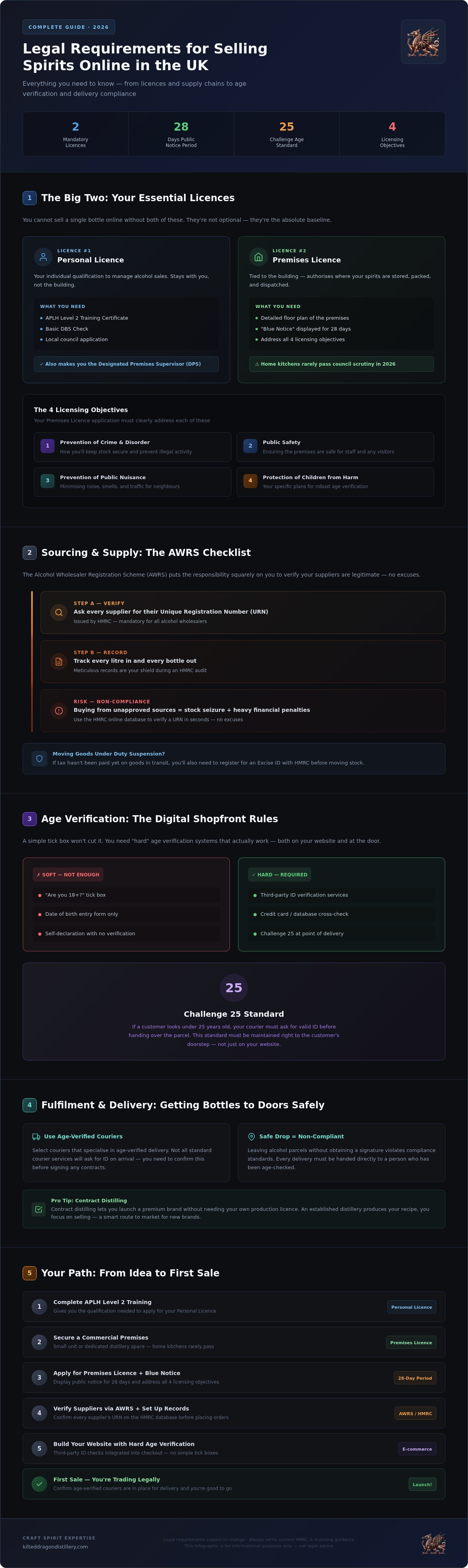
The Personal Licence is your individual qualification to manage alcohol sales. To get this, you'll need to complete the Award for Personal Licence Holders (APLH) Level 2 training course. It's a straightforward qualification that covers the legalities and social responsibilities of the trade. Once you've passed, you'll apply to your local council. You'll need to provide your certificate along with a basic DBS check to prove you're a fit and proper person to hold the licence. This process also allows you to take on the role of the Designated Premises Supervisor (DPS), which is a mandatory requirement for any premises where alcohol is sold.
Securing the Premises Licence
Whilst the Personal Licence stays with you, the Premises Licence is tied to the building. This document authorises the specific location where your spirits are stored, packed, and dispatched. Your application must include a detailed floor plan that clearly marks the areas used for alcohol storage. A key part of the process is the "Blue Notice." You're required to display this public notice at your premises for 28 days, allowing the community to see your plans. To avoid objections, your application must explain how you'll meet the four licensing objectives:
The prevention of crime and disorder: How you'll keep your stock secure and prevent illegal activity.
Public safety: Ensuring the premises are safe for staff and any visitors.
The prevention of public nuisance: Keeping noise, smells, and traffic to a minimum for your neighbours.
The protection of children from harm: Your specific plans for robust age verification.
It's a common dream to start from a kitchen table, but in 2026, this is a tough sell for most local authorities. Councils are often wary of residential areas becoming hubs for commercial alcohol storage. Between business rates, planning permission, and the four licensing objectives, your home kitchen often fails the test. Most successful new brands now opt for small commercial units or dedicated distillery spaces to ensure they meet every one of the legal requirements for selling alcohol online UK without a hitch.
Sourcing and Supply: The AWRS Checklist
Once you've secured your licences, the next step in meeting the legal requirements for selling alcohol online UK is ensuring your supply chain is watertight. You can't just buy a few cases from a local supermarket or an unverified trader and start selling them on your site. The Alcohol Wholesaler Registration Scheme (AWRS) was introduced to tackle alcohol fraud; it places the responsibility directly on you to ensure your suppliers are legitimate.
Every wholesaler you work with must have a Unique Registration Number (URN) issued by HMRC. It's your job to ask for this and, more importantly, to check it. Meticulous record-keeping is your best friend here. You need to track every litre of spirit that enters your storage and every bottle that leaves for a customer's doorstep. This trail of paperwork isn't just for your accountant. It's your shield if HMRC ever decides to perform an audit on your business.
The HMRC Paperwork Trail
Checking a supplier is easier than it sounds. You can use the HMRC online database to verify a partner's URN in seconds. If you're moving goods under duty suspension, meaning the tax hasn't been paid yet, you'll also need to register for an excise ID. Buying from an unapproved source can lead to your stock being seized or facing heavy financial penalties. It's always better to source your spirits from established, verified producers who understand these hurdles and maintain their own compliance perfectly.
Small Producer Relief Explained
One of the most significant shifts for the 2026 tax year is how Small Producer Relief functions. This scheme allows smaller brands to pay a reduced rate of Alcohol Duty, helping craft makers stay competitive against global giants. To qualify, you'll need to calculate your total production volume of pure alcohol. If you're just starting out, keeping your production within these relief thresholds can save your business thousands of pounds in tax every year.
Partnering with an established distillery for contract distilling can often simplify this entire headache. They handle the complex duty reporting and production logs, allowing you to focus on the branding and sales side of your business. It’s a clever way to ensure you're fully compliant with the legal requirements for selling alcohol online UK whilst benefiting from the lower tax rates designed to help our industry thrive. By letting experts handle the "litres and logs," you ensure every bottle of The Fire Dragon Spiced Rum or vodka you sell is tax-paid and totally legal.
Your Digital Shopfront: Age Verification and E-commerce Rules
Your website is the digital cellar door for your brand. It's the place where the story of your craft meets the convenience of modern shopping. However, building this space requires more than just beautiful photography and a smooth user experience. To satisfy the legal requirements for selling alcohol online UK, your digital shopfront must act as a responsible gatekeeper. This starts the very second a visitor lands on your page.
The old-fashioned "Are you 18?" tick box is no longer enough to protect your business. In 2026, regulators expect a "hard" age gate that effectively bars underage users from even viewing your products. This isn't just about being cautious; it's about demonstrating your commitment to the four licensing objectives we discussed earlier. Your shopfront must also clearly display your premises licence number and registered company details, usually tucked neatly into the footer, to show customers and authorities alike that you're a legitimate operator.
Setting Up Age Verification Systems
Modern compliance relies on technology that goes beyond a simple date-of-birth entry. You'll likely need to integrate third-party age verification software into your checkout flow. These systems cross-reference customer details against secure databases to confirm their age in real time. Whilst this adds a small layer of friction, it's a vital step in proving due diligence. You must also be mindful of GDPR. Storing age-related data requires a clear privacy policy and secure handling to ensure you don't fall foul of data protection laws whilst trying to follow licensing ones.
Platform-Specific Considerations
Choosing the right e-commerce platform is a strategic decision. Shopify is a favourite for many, but you must be careful with Shopify Payments, as their "Prohibited Items" list can be restrictive for alcohol sellers. Similarly, PayPal has strict pre-approval requirements for booze businesses. We often recommend bespoke builds or specific plugins that allow for greater control over your legal disclaimers. Ensure that your gin or rum category pages include all necessary ABV information and unit measurements. This transparency builds trust with your audience and keeps your digital shopfront firmly on the right side of the law.
Fulfilment and Delivery: Getting Bottles to Doors Safely
The moment a customer clicks 'order' is often where your focus shifts to the next sale, but for the law, the process is only halfway through. One of the most critical legal requirements for selling alcohol online UK is ensuring that the alcohol never ends up in the hands of a minor, which means your responsibility extends right to the doorstep. You aren't just shipping a package; you're managing a controlled substance handover that requires precision and care.
Selecting the right courier is arguably the most important logistical decision you'll make for your brand's reputation. You need a partner that offers a dedicated 'Age Verified Delivery' (AVD) service rather than just a standard signature. This is a contractual commitment from the driver to check identification if the recipient looks under 25. If your courier leaves a bottle of Welsh Celtic Rebel Smoked Agave Spirit on a porch or with a neighbour without checking ID, your business is the one legally on the hook for the breach.
The Delivery Driver’s Responsibility
When you set up your shipping profiles, you must ensure your contract with the courier strictly forbids 'safe place' deliveries. Alcohol shipments require a face-to-face interaction to be legal. If the customer isn’t home or cannot provide a valid passport or driving licence, the driver must take the parcel back to the depot for redelivery. It might lead to a few more 'failed delivery' emails, but it’s the only way to stay compliant. Every driver acts as a final checkpoint for your brand's integrity and legal standing.
Packaging and Branding Compliance
Meeting the legal requirements for selling alcohol online UK means every bottle must carry the correct legal weight on its labels before it even leaves your warehouse. Every bottle must clearly display the ABV (Alcohol by Volume), the total units of alcohol, and the mandatory Chief Medical Officer warnings regarding pregnancy and health. Whilst you're ensuring your labels are legal, you can also consider how your outer packaging reflects your craft. Explore our merchandise category for inspiration on how to add those branded shipping extras that make an unboxing feel special whilst staying professional.
If you're looking to share your craft beyond our borders, the legal landscape shifts significantly. International shipping for UK-based alcohol retailers involves navigating the specific customs duties, excise taxes, and local alcohol laws of each destination country. Some nations have strict government monopolies or outright bans on certain spirits, whilst others require complex import documentation. Always verify the rules for each territory before you enable global shipping at checkout to avoid your hard work being held at a border indefinitely.
Scaling Your Brand: From Idea to First Sale
Scaling a brand from a kitchen-table dream to a household name is a journey that requires both creative fire and a cool head for the rules. At Kilted Dragon Distillery, we've always believed that quality and compliance are two sides of the same coin. You can't have one without the other. By building your business on the firm foundation of the legal requirements for selling alcohol online UK, you aren't just ticking boxes; you're creating a mark of quality that your customers will recognise and trust.
When you're transparent about your licences and your process, that compliance becomes a powerful marketing asset. It tells your community that you're a serious player in the craft spirit world. It's about more than just avoiding fines. It's about showing that every bottle of The Purest Dragon Vodka or Welsh Celtic Rebel they buy has been produced, stored, and sold with the highest level of care and integrity. This integrity is what turns a one-time buyer into a lifelong advocate for your brand.
The Contract Distilling Advantage
One of the biggest hurdles for any new brand is the sheer cost and complexity of setting up a physical distillery. This is where contract distilling becomes your secret weapon. By partnering with an established producer, you can utilise their existing production licences and expertise to bring your unique recipe to life. We help new brands navigate the maze of recipe development and ensure that your labels meet every single legal requirement before they even hit the printer. This allows you to focus your energy on what you do best: building your brand, telling your story, and connecting with your audience whilst we handle the heavy lifting of distillation and logistics.
Your Launch Checklist
Before you flip the switch on your website and share your craft with the world, it's worth doing one final run-through. Ensure you've got your personal and premises licences firmly in place and your AWRS checks completed for every supplier. You'll also need to budget for your annual licence fees and any age verification software subscriptions. It's a good idea to confirm your 2026 basic DBS check costs early so there are no surprises in your startup budget. Ready to start? View our full range of spirits to see how a compliant, award-winning brand looks in action. Launching a spirit business is a marathon, not a sprint, but with the right legal standing, you're already miles ahead of the competition.
Launch Your Craft Spirit Brand with Confidence
Building a successful online spirit business is about more than just a great recipe; it's about creating a brand that stands on a foundation of trust and integrity. By securing your licences early and embracing the right technology for age verification, you're setting yourself up for long-term success. Navigating the legal requirements for selling alcohol online UK ensures that every bottle reaching a customer's door is a testament to your professionalism and dedication to the craft.
We're here to help you bridge the gap between inspiration and that very first sale. Whether you need small-batch expertise, full branding and recipe development support, or reliable UK-wide shipping, our experience in the industry is at your disposal. You've got the vision, and now you have the checklist to make it a reality. It's time to stop dreaming and start distilling your future.
The path to becoming a master maker is challenging but incredibly rewarding. We can't wait to see what you create.
Frequently Asked Questions
Can I sell alcohol online from my home in the UK?
You can technically sell from home, but it's often a challenge to get the necessary premises licence for a residential address. Most local councils are hesitant to approve homes as commercial storage hubs for alcohol. You'll still need to meet every one of the legal requirements for selling alcohol online UK, which includes planning permission and meeting strict safety standards that many domestic kitchens simply won't pass.
How much does an alcohol licence cost in 2026?
A Personal Licence application usually costs around £37, but you'll also need to factor in about £18 for a basic DBS check. Premises licences are more variable, as the fee is based on the rateable value of your building. These typically range from £100 to £1,905 for the initial application. Don't forget to include the cost of your APLH Level 2 training course in your initial startup budget.
Do I need a licence to sell alcohol gift sets online?
Yes, you absolutely need a licence even if the alcohol is part of a larger gift hamper. UK law doesn't distinguish between a single miniature bottle in a set and a full case of spirits. If any amount of alcohol is being sold, you must hold both a Personal Licence and a Premises Licence to stay on the right side of the law and avoid heavy penalties.
What is the penalty for selling alcohol online without a licence?
The penalties are severe and can include an unlimited fine or even a prison sentence of up to six months. Authorities also have the power to seize all of your stock, which can be a devastating financial blow for a new brand. It's never worth the risk of cutting corners regarding the legal requirements for selling alcohol online UK, as the consequences can end your business before it starts.
How do I verify a customer’s age on my website?
You should use integrated third-party verification software that checks customer details against secure databases during the checkout process. Relying on a simple "Are you 18?" tick box isn't sufficient for 2026 compliance. These systems provide a digital audit trail that proves you've taken all reasonable steps to prevent underage sales, protecting your business from potential prosecution if a delivery is challenged.
Do I need to pay VAT and Alcohol Duty on every bottle sold?
You must pay Alcohol Duty on every bottle, though Small Producer Relief can reduce this rate if your production volume is low enough. VAT is only mandatory once your taxable turnover exceeds the current £90,000 threshold. However, many brands choose to register for VAT earlier to reclaim the tax on their business expenses. Keeping detailed production and sales logs is essential for accurate reporting to HMRC.
Can I sell my own homemade gin online?
No, you cannot sell gin made in a domestic kitchen because you need a Distiller's Licence from HMRC to produce spirits. Getting this licence for a residential property is almost impossible due to strict safety and environmental regulations. If you've developed a winning recipe at home, your best path to market is partnering with an established distillery for contract distilling, which allows you to use their professional equipment and licences.
What is a Designated Premises Supervisor (DPS)?
A DPS is the person named on the premises licence who is responsible for the day-to-day management of alcohol sales. This individual must hold a valid Personal Licence and acts as the main point of contact for the police and local authorities. Whilst they don't have to be on-site at all times, they are legally accountable for ensuring all sales are carried out responsibly and in full compliance with the law.


Comments