


On-Trade and Off-Trade Strategy for Craft Independents
What if the "craft" bottle on your shelf is actually a corporate giant in a clever disguise? It is a frustration many of us share whilst staring at a back bar or a supermarket shelf, trying to decipher whether we are supporting a master maker or a global marketing budget. Understanding the nuances of the on trade and off trade with craft independents is the key to reclaiming your glass. The drinks industry loves its gatekeeping and its jargon, but the reality is far more vibrant when you look past the polished labels.
We understand that you want more than just a drink; you want a story, a sense of origin, and a level of flavour that justifies the price. In this guide, we'll strip away the elitist language to show you how genuine independent distillers are rewriting the rules of the trade. You will learn exactly how the market functions and how to source the finest spirits for your home collection or your next night out. From the smoky depth of a Welsh agave spirit to the botanical precision of a small-batch gin, we are exploring a world where passion always outshines production lines.
Table of Contents
What on Earth are the On-Trade and Off-Trade anyway?
The drinks industry often hides behind a veil of professional terminology that can feel exclusionary to the very people who enjoy the spirits. At its most basic level, the distinction between the on-trade and off-trade is determined by where the seal of the bottle is broken. If you are sipping a drink in the same venue where you purchased it, such as a dimly lit cocktail bar, a bustling pub, or a refined restaurant, you are engaging with the "on-trade". The "off-trade" encompasses every instance where you buy a bottle to enjoy elsewhere. This includes supermarkets, independent off-licences, and your favourite online distillery shops.
Understanding the nuances of the on trade and off trade with craft independents is essential for any discerning drinker because it dictates both the price you pay and the experience you receive. These channels are governed by complex alcohol laws and regulations that influence everything from licensing hours to duty rates. Following the February 2026 duty increase of 3.66%, which was tied to the Retail Price Index, the cost of a premium spirit has become a more conscious choice for many. However, the shift we are seeing in 2026 is not just about economics; it is about a profound rise in the sophistication of home-drinking. We are no longer just buying a bottle. We are curating a personal collection.
The On-Trade: The theatre of the bar
Bars serve as the ultimate stage where spirits perform. They are the vital showroom for independent makers who lack the massive marketing budgets of global giants. In this setting, the bartender acts as a knowledgeable storyteller and a friendly guide through a curated landscape of flavour. This environment is where a spirit like the Welsh Celtic Rebel Smoked Agave Spirit truly shines. The theatre of the serve, the specific glassware, and the expert knowledge of the staff allow you to experience a spirit exactly as the maker intended. The on-trade is about discovery. It is where you find the soul of a brand before deciding to bring it into your own home.
The Off-Trade: Your personal home bar
The rise of the "home connoisseur" has transformed the off-trade from a simple transaction into a pursuit of excellence. We are no longer content with the limited, mass-produced options found on a dusty supermarket shelf. Instead, we seek out the meticulous care and transparency of small-batch producers through digital channels. Online shopping has become the greatest ally of the independent distiller. It allows you to have The Fire Dragon - New Welsh Spiced Rum delivered directly to your doorstep with ease. This direct connection ensures that the value stays with the maker whilst providing you with the convenience of building a world-class back bar without ever leaving your sofa.
Behind the Bar: How the On-Trade is embracing independent spirits
The UK's hospitality landscape is undergoing a quiet but determined transformation. Walk into any leading independent bar in London, Cardiff, or Edinburgh, and you will notice a distinct lack of the usual global spirits giants. Instead, the back bars are populated by bottles with character, heritage, and a clear sense of place. This shift in the on trade and off trade with craft independents is driven by a consumer base that values the "why" behind their drink as much as the "what". A spirit with a genuine story, born from a small-batch copper still rather than a massive industrial complex, creates a lasting impression that a corporate label simply cannot replicate.
Provenance has become the defining trend of the modern bar. We see a growing hunger for transparency, where drinkers want to know the origin of the botanicals in their gin or the specific wood used to age their rum. This focus on local excellence allows independent venues to differentiate themselves, whilst providing a sensory journey that feels authentic and deeply connected to the maker's craft. It is about more than just liquid in a glass; it is about supporting the creative courage of those who refuse to take shortcuts.
The craft cocktail revolution
Bartenders are no longer just service providers; they are the architects of flavour. To build a truly remarkable drink, they require spirits that possess depth and integrity. Many are turning to unique options like Welsh Pink Gin to create signature serves that stand out in a crowded market. These small-batch spirits are designed to be the star of the show, possessing enough complexity to shine through without the need for cloying, sugary mixers. When a bartender chooses an independent brand, they are choosing a partner who shares their dedication to every single drop.
Challenges for the little guys in the pub
Despite this passion, the path to the back bar is often blocked by the traditional structure of the alcohol market. Many pubs are still bound by "tap ties" or restrictive exclusivity deals that favour large-scale distributors. These corporate arrangements can make it incredibly difficult for a small distillery to secure a permanent spot amongst the global giants. However, a new wave of independent bars is breaking these outdated moulds by prioritising quality over volume. By choosing to support fellow small businesses, these venues ensure the craft spirit movement continues to thrive. Your decision to order the independent option at the bar is a direct vote for the future of British distilling.
If you are looking to bring that same level of artisanal quality to your own collection, you can explore our range of award-winning spirits.
From Shelf to Sofa: The thriving Off-Trade and the craft at-home revolution
The sanctuary of the home has become the new frontier for spirit discovery. Whilst the cocktail bar provides a stage for performance, the living room offers the luxury of time. We have seen a remarkable shift in how people engage with the on trade and off trade with craft independents, with more enthusiasts choosing to invest in their own personal collections. This isn't merely about convenience; it's a sophisticated movement where drinkers have become amateur mixologists, meticulously recreating the complexity of a professional serve from the comfort of their own kitchens. The ritual of opening a beautifully branded bottle and appreciating the weight of glass has become an essential part of the modern evening.
This at-home revolution is supported by a deeper connection to the distiller's process. When you choose an independent spirit for your shelf, you're often looking for the transparency and dedication that mass-produced labels lack. The off-trade allows you to linger over the label, research the provenance of the ingredients, and truly understand the marriage of old-world techniques with contemporary ideas. It is a slower, more considered form of consumption that celebrates quality over sheer volume.
The rise of the 'D2C' (Direct-to-Consumer) model
Cutting out the middleman has proven to be a win-win for both the maker and the connoisseur. By purchasing directly from a distillery website, you gain access to exclusive small-batch runs that are far too rare to ever reach a supermarket shelf. This direct channel fosters a genuine relationship between you and the master maker. Many enthusiasts are now deepening this bond by moving from digital interaction to physical discovery through immersive distillery experiences. These visits provide a firsthand look at the precision and passion that goes into every bottle, turning a simple purchase into a shared journey of excellence.
Curating a world-class home bar
Building a home bar is an act of curation that reflects your personal taste and appreciation for the craft. A well-rounded collection now requires more than just a standard gin or vodka; it demands bottles that offer a unique sensory profile. This might include the indulgent richness of a Dubai White Chocolate Liqueur or a characterful, small-batch vodka that can stand entirely on its own. Organising a home tasting evening with friends has become a favourite way to explore these nuances. It allows you to share the stories of independent distillers whilst enjoying a level of quality that was once reserved only for the finest specialist bars.
The David vs Goliath struggle for independent craft distillers
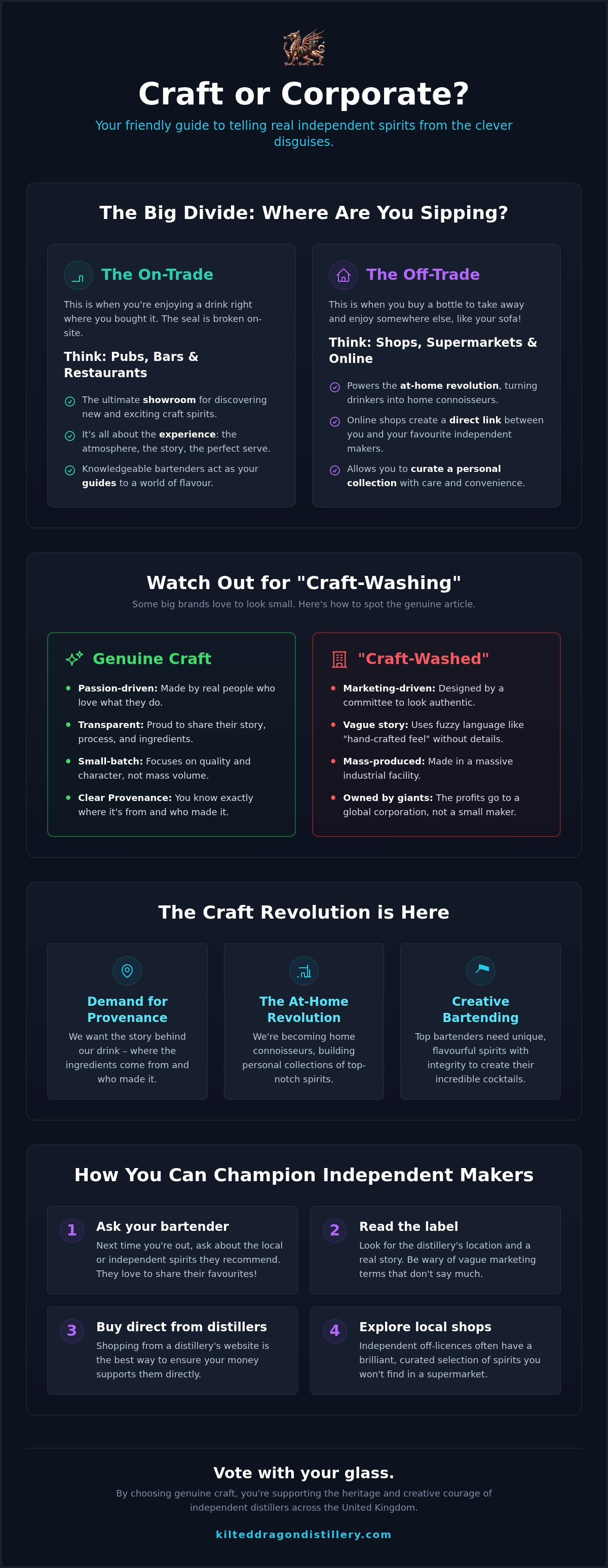
The market for spirits is a battlefield where the weapons are often marketing budgets rather than the quality of the liquid. For those navigating the on trade and off trade with craft independents, the greatest challenge is often seeing through the illusion of "craft-washing". This is the calculated practice where global corporations launch brands designed to look like small, artisanal startups. They use rustic labels, faux-heritage stories, and evocative language to mimic the soul of a true independent. Beneath the surface, these products are often mass-produced in industrial facilities that lack the meticulous care of a master maker.
True independent distilling is a labour of love. It is about the physical demand of hauling sacks of grain, the sensory precision of making "cuts" by taste, and the creative courage to experiment with bold flavours. For a small distillery, success isn't just a line on a spreadsheet; it's the pride of seeing a bottle on a local shelf. This transparency in methods and ingredients is what separates the innovators from the imitators. Whilst the giants dominate the supermarket aisles through sheer volume and aggressive pricing, the independents win on heart and integrity.
How to spot a true independent
To find the real thing, you must look closer at the label. A genuine independent will almost always state "distilled and bottled by" the distillery itself, rather than the ambiguous "bottled for" or "produced for" often found on supermarket-own or corporate brands. You should also look for a name, a face, or a family heritage that feels grounded in reality. If a brand claims to be "small-batch" but produces millions of litres annually, the term has lost its meaning. True craft is defined by the limitations of the equipment and the hands-on involvement of the distiller.
Why the price tag is different
Quality comes at a cost that global giants simply don't have to bear. Independent makers prioritise premium ingredients, such as locally sourced botanicals or high-grade molasses, whereas mass producers often rely on the cheapest possible neutral grain spirit. Choosing independent also means you are supporting local jobs and the preservation of traditional skills within the UK. Small distillers face a steeper climb because they lack the massive economies of scale that allow corporate giants to absorb the 3.66% RPI-linked duty increases more comfortably. Every bottle you buy represents a direct investment in the future of artisanal spirit production.
Navigating the craft landscape: How to support independent distillers
Supporting independent distillers is an active choice that reverberates through the entire drinks industry. Every time you navigate the on trade and off trade with craft independents, you're doing more than just purchasing a bottle; you're preserving a culture of excellence and creative courage. It starts with a simple question at the bar. If you don't see an independent option on the shelf, ask for one. Bartenders and bar managers are the gatekeepers of the on-trade, and they respond directly to the desires of their patrons. Your curiosity creates the demand that allows small-batch producers to secure their place amongst the global giants.
Digital word-of-mouth has become the lifeblood of the artisanal movement. For a small distillery, a single thoughtful review or a shared photo of a favourite serve can be more impactful than a corporate marketing budget. It provides the momentum needed to keep the stills running. Beyond the liquid itself, you can support these makers by thinking outside the bottle. Purchasing merchandise or gift sets provides vital revenue that helps sustain traditional skills. Visiting the source is perhaps the most rewarding way to engage. Distillery tours offer a sensory education, allowing you to see the precision of the process and meet the people who dedicate their lives to the craft.
Start your independent journey today
The best way to broaden your palate is to step away from the predictable and embrace spirits that possess a genuine personality. Trying something unexpected, such as a Welsh Smoked Agave Spirit, challenges your perceptions of what a homegrown spirit can be. These creations are born from a desire to innovate whilst respecting foundational rules. You can explore a world of vibrant flavours by checking out our full range of independent craft spirits. Each bottle is an invitation to discover a new favourite that hasn't been diluted by corporate compromise.
The future of craft is in your hands
The outlook for 2026 is exceptionally bright for those who value authenticity. With the UK craft spirits market projected to grow at a compound annual rate of 21.01% through to 2034, the independent revolution is gaining serious ground. This growth is fuelled by your choices. By prioritising quality and provenance, you help maintain the diversity and creativity of the UK drinks scene. You are the architect of this future. Join the movement and browse our latest small-batch creations to see where the next chapter of British distilling is heading.
Reclaiming the Future of Your Glass
The journey from the back bar to your sofa is defined by the choices you make as a conscious drinker. We have peeled back the layers of industry jargon to reveal how authentic provenance and meticulous craftsmanship remain the only real guarantees of quality in a world of corporate imitation. Whether you are enjoying a signature serve in a dim-lit venue or curating your own collection at home, your support for the master maker ensures that the spirit of innovation continues to thrive.
Navigating the on trade and off trade with craft independents is about more than just a transaction; it is a commitment to heritage and creative courage. By seeking out family-owned producers who value transparency, you are helping to preserve the traditional skills that define the best of British distilling. Our award-winning, small-batch spirits represent a unique fusion of Welsh and Scottish heritage, crafted with precision for those who refuse to settle for the ordinary.
Take the first step in your discovery today and celebrate the liquid that truly has a soul. The future of craft is yours to pour.
Frequently Asked Questions
What is the difference between on-trade and off-trade?
The distinction depends entirely on where the drink is consumed. The on-trade refers to venues like bars, pubs, and restaurants where you purchase and enjoy a spirit on the premises. Conversely, the off-trade includes supermarkets, independent bottle shops, and online distillery stores where you buy a bottle to take home. Understanding the nuances of the on trade and off trade with craft independents helps you identify where to find the most authentic spirits.
How can I tell if a spirit brand is truly independent?
You should examine the label for the phrase "distilled and bottled by" followed by the distillery's name. Truly independent brands are transparent about their origin and usually have a real person or family at the helm. Be wary of "bottled for" or "produced for" labels, which often indicate a corporate product designed to mimic a craft aesthetic. Authentic makers take pride in their physical distillery and their hands-on process.
Why are craft spirits often more expensive than big-name brands?
Independent spirits carry a higher price because they lack the massive economies of scale enjoyed by global giants. Small producers invest in premium, often locally sourced ingredients rather than cheap neutral grain spirits. Furthermore, manual labour and meticulous small-batch methods increase production costs. With the 3.66% RPI duty increase in 2026, smaller distillers must also absorb tax pressures that corporate entities can easily offset through high-volume sales.
Is it better to buy craft spirits online or in a shop?
Buying directly from a distillery website is often the best way to ensure the maximum value stays with the maker. Online stores frequently offer exclusive small-batch runs and limited editions that never reach physical shelves. Whilst local specialist shops provide immediate gratification and expert advice, the direct-to-consumer model allows you to build a genuine relationship with the distillery through newsletters, rewards, and insights into their latest creative experiments.
Can I find independent craft spirits in regular supermarkets?
It is possible to find some independent brands in supermarkets, but the selection is often extremely limited. Large retailers prioritise high-volume products, which frequently leads to "craft-washing" where corporate brands take up the shelf space intended for small makers. To find a truly diverse range of artisanal spirits, you are better served by visiting specialist independent off-licences or purchasing directly from the distillery's own digital storefront.
What does 'small-batch' actually mean for a distillery?
Small-batch refers to spirits produced in limited quantities using traditional pot stills rather than industrial continuous columns. This method allows the master maker to monitor every stage of the process, making precise "cuts" by taste and scent to ensure only the heart of the distillation is kept. It is a commitment to quality over quantity, ensuring that every bottle possesses a level of character and complexity that mass production cannot replicate.
How can I support my favourite independent distillery besides buying bottles?
Sharing your experiences on social media and writing honest reviews is incredibly valuable for those navigating the on trade and off trade with craft independents. Small brands often lack the advertising budgets of global rivals, so your personal recommendation carries significant weight. You can also visit the distillery for a tour or purchase branded merchandise. These actions provide vital support that helps maintain the diversity and creativity of the UK's independent drinks scene.
Are independent spirits really better quality than mass-produced ones?
Independent spirits generally offer superior quality through ingredient integrity and transparency of method. Mass-produced spirits are designed for absolute consistency, which often involves stripping away the natural oils and nuances that provide flavour. Independent makers embrace these variations, resulting in a more complex and evocative spirit. When you choose craft, you are enjoying a product that prioritises the art of distillation over the demands of a corporate spreadsheet.

Comments