


Why Community Driven Small Batch Distilleries Matter
If you think the spirit in your glass is just a blend of water and botanicals, you're missing the most important ingredient: the heartbeat of the people who live just down the road from the copper still. It's frustratingly common to feel disconnected from what we buy, especially when global brands use 'craft-washing' to mimic the feel of community driven small batch distilleries without actually doing the work. You likely want to know that your money supports a real person and a local story, rather than just another corporate balance sheet.
We believe that authenticity shouldn't be a marketing gimmick. In this guide, you'll discover how these makers are revolutionising the industry through genuine collaboration and a stubborn refusal to compromise on quality. We'll explore the technical benefits of small-scale production, from the precision of the copper pot 'cut' to the richness of local infusions, whilst showing you how to find authentic UK makers. It's time to see how choosing a spirit with a real heritage can help a local community truly thrive.
Table of Contents
What is a Community Driven Small Batch Distillery Exactly?
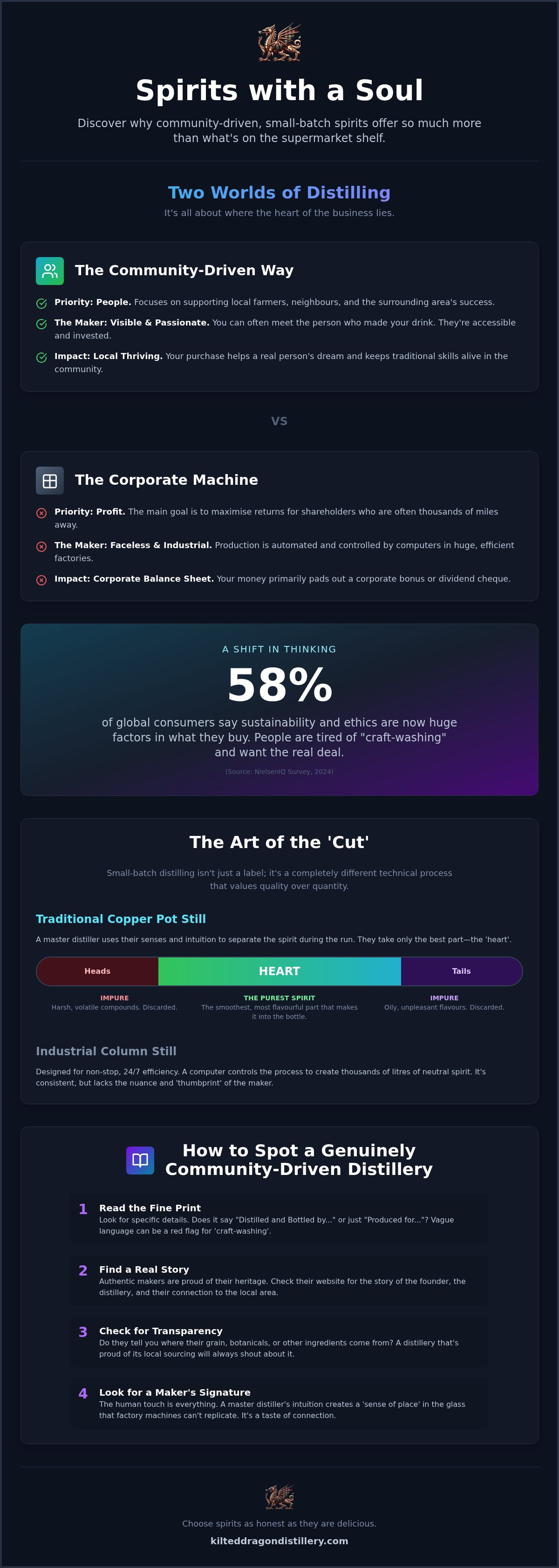
When we talk about a community driven distillery, we aren't just talking about the size of the building or the number of staff. It's really about where the heart of the business lies. For most big corporate brands, the goal is simple: maximise the profit for shareholders who might live thousands of miles away. However, community driven small batch distilleries operate on a completely different frequency. These are businesses that prioritise the people around them, from the local farmers providing grain to the neighbours who drop in for a chat during a tasting. It's a shift from faceless, industrial production to a model where the maker is visible, accessible, and deeply invested in the local area's success.
This movement is picking up serious speed amongst UK spirits drinkers in 2026. People are feeling a bit worn out by "craft-washing," where massive companies slap a rustic label on a mass-produced bottle. According to a NielsenIQ survey from 2024, 58% of global consumers now say sustainability and ethics are huge factors in what they buy. In the UK, this has translated into a desire for transparency. People want to know the story behind the bottle, and they want to feel like their purchase is helping a real person's dream rather than just padding out a corporate bonus. This rise of the Microdistillery culture represents a return to spirits with a soul.
The Core Values of Craft Distilling
At the centre of this movement are a few non-negotiable values. Transparency is the biggest one. You won't find vague "imported spirits" labels here. Instead, you'll see exactly where the ingredients came from and how they were handled. There's also a massive focus on sustainability. Because these distilleries live and work in their communities, they're naturally more inclined to reduce their carbon footprint and protect the local environment. We like to call this the "Modern Traditionalist" approach. It's about having a deep respect for the history of distilling whilst having the creative courage to use modern, eco-friendly techniques to make things better for the future.
Why 'Small Batch' Isn't Just a Marketing Label
You'll see the words "small batch" on almost every bottle in the supermarket these days, but in the world of community driven small batch distilleries, it has a very specific technical meaning. Big industrial plants use continuous column stills that run 24/7 to pump out thousands of litres of neutral spirit. It's efficient, but it's also a bit clinical. We prefer traditional copper pots. These require a master maker to be present for every second of the run, using their intuition and senses to decide exactly when to make the "cut."
By taking a narrower cut of the "heart" of the run, a small-batch producer ensures that only the purest, most flavourful spirit makes it into the final bottle. This hands-on oversight is what creates the uncompromising quality people expect from craft spirits. It also allows for much more experimentation. Because we aren't making millions of litres at a time, we can take risks with bold flavour pairings; like our small-batch rum infusions; that a global brand simply wouldn't dare to try. It's about quality over quantity, every single time.
The Flavour of Connection: How Community Impacts Your Glass
Have you ever noticed how a mass-produced spirit often tastes exactly the same, batch after bottle? It's technically perfect but feels a bit hollow. In contrast, the output from community driven small batch distilleries carries the thumbprint of the maker. A master distiller doesn't just watch a screen; they use their nose and palate to guide the process. This human intuition beats a computer-controlled factory every time because it allows for subtle variations that celebrate the ingredients rather than hiding them. When you take a sip, you're tasting a sensory experience crafted with care, where the texture is often silkier and the flavours are more layered. It's a far cry from the clinical efficiency of industrial spirits.
Sourcing with Integrity
Using local botanicals isn't just about being "green"; it's about capturing a specific moment and place. In the world of spirits, we call this "terroir," which refers to how the specific environment, soil, and climate of a region influence the unique flavour profile of the plants used in a British botanical gin fusion. By working closely with local farmers, these distilleries become vital economic drivers in their communities, ensuring that traditional agricultural skills stay alive. This collaboration means the ingredients haven't spent weeks in a shipping container. They're fresh, vibrant, and packed with the oils that give a spirit its true character.
The Role of Heritage and Storytelling
A spirit's story isn't just some text on the back of a bottle; it's the foundation of its flavour. When we blend different cultures, like our own mix of Welsh and Scottish heritage, we create something entirely new that still feels grounded in history. A great example of this is our Scwelsh Gin, where the fusion of two distinct traditions results in a profile you simply won't find anywhere else. This "soul" makes the drink more satisfying. You aren't just consuming a product; you're participating in a narrative of evolution and craft. Supporting these makers means you're helping to keep these artisanal skills thriving across the UK for the next generation. If you're curious to taste what happens when heritage meets innovation, you might enjoy exploring our range of spirits to find your new favourite.
Collaboration Over Competition: The Heart of the Movement
In the world of massive global conglomerates, the goal is usually to dominate the market and wipe out the competition. But if you step inside the world of community driven small batch distilleries, you'll find a completely different vibe. Here, makers often swap tips on botanical ratios or lend a hand when a pump breaks down. This shared wisdom is vital for survival, especially when you consider the state of the craft distilling industry and the regulatory hurdles small producers face today. By working together, these independent makers ensure the whole scene stays vibrant, which ultimately gives you more variety and better quality in your glass. It's a collaborative spirit that puts the craft ahead of the corporate ego.
Supporting the Next Generation of Makers
Many established distilleries don't just make their own spirits; they act as incubators for new talent. They offer branding advice and help with recipe development to get fresh ideas off the ground. A huge part of this is contract distilling services, which allow smaller brands to use high-quality copper stills without the massive upfront cost of building their own facility. You might think helping a "competitor" is bad for business, but it actually strengthens the entire craft landscape. It keeps the industry innovative and prevents it from becoming stagnant or dominated by a few faceless giants. This teamwork ensures that the UK remains a global leader in spirits innovation.
Distillery Experiences: Inviting the Community In
Building a real connection means more than just selling a bottle; it’s about opening the doors and letting people see the process for themselves. When a distillery has an open-door policy, it builds a level of trust that a global brand simply can't touch. These distillery experience days are where the magic happens. You aren't just a customer anymore; you're part of the ongoing story. You get to smell the mash, touch the botanicals, and see the passion that goes into every run. It turns a simple purchase into a shared journey, creating brand ambassadors who truly understand the meticulous work behind the spirit. This transparency is the ultimate antidote to the "craft-washing" so common in the industry today.
How to Spot a Genuinely Community-Driven Distillery
Walking into a spirits shop can be a bit of a minefield. You're surrounded by rustic labels, handwritten fonts, and stories of "traditional recipes," but how much of that is real? Finding authentic community driven small batch distilleries shouldn't feel like a detective job, but big corporations are getting better at mimicking the look of independent makers. This "craft-washing" is designed to make you feel like you're supporting a local artisan whilst your money actually flows back to a global conglomerate. To find the real deal, you need to look past the marketing and focus on the evidence of human hands in the process.
The first place to look is the bottle itself. A genuine small-batch spirit will usually carry specific details that a factory line simply can't bother with. Look for batch numbers, bottle numbers, and even the signature of the distiller. These aren't just for show; they're a record of a specific run where a person made the decisions. Transparency is the ultimate test. A real community-focused maker will be proud to tell you exactly where their ingredients were sourced and where the distillation took place. If the origin story feels vague or focuses more on "lifestyle" than the actual process, it's time to be a bit sceptical.
Questions to Ask Your Local Distiller
If you're visiting a tasting room or chatting with a maker at a market, don't be shy about asking a few questions. Genuine distillers love talking about their work. Start by asking where the spirit is actually distilled. You're looking for evidence of on-site copper stills rather than just a bottling facility. It's also worth asking who owns the brand. Is it an independent maker who lives in the area, or is it a subsidiary of a multinational firm? Finally, find out how they support their local community. Whether they're sourcing local botanicals or collaborating with other independent UK businesses, their impact should be visible and local.
The Red Flags of 'Craft-Washing'
Large brands often use "hand-crafted" as a buzzword because it has no legal definition. It's a major red flag if you see this term used without any supporting detail about the production methods. Another warning sign is a brand that hides its corporate parentage behind a very rustic, "small-town" aesthetic. If you can't find the name of the master distiller or a clear description of the still they use, there's a good chance the spirit is mass-produced and simply rebottled. Authentic community driven small batch distilleries have nothing to hide and will always prioritise honesty over a polished corporate narrative.
Join the Kilted Dragon Community: Our Approach to Craft
At Kilted Dragon, we've always believed that the best spirits are born from a marriage of heritage and innovation. Our distillery was founded on the passionate blend of Welsh and Scottish traditions, a combination that informs every drop we produce. As one of the UK’s community driven small batch distilleries, we don’t just follow recipes; we curate experiences that celebrate our roots whilst pushing the boundaries of what a modern spirit can be. We’ve stayed true to our commitment to quality by using traditional copper pot methods, ensuring that every run is overseen by a master maker who cares about the final result as much as you do. It’s a hands-on process that prioritises the integrity of the spirit over the speed of the production line.
A Taste of Our Heritage
Blending the distinct cultures of Wales and Scotland allows us to create flavour profiles that are truly unique. You'll find this spirit of innovation in our premium Welsh rum, particularly 'The Fire Dragon,' which carries a warmth and complexity that reflects our dual heritage. We’re also incredibly proud of our 'Welsh Celtic Rebel' Smoked Agave Spirit, a product that challenges the status quo by bringing a smoky, artisanal edge to a category usually dominated by mass-market imports. Our focus is always on creating bold flavour pairings that you simply won't find anywhere else on the shelf. Whether it’s the crispness of our vodka or the botanical richness of our gin, every bottle is a testament to our 'Modern Traditionalist' philosophy.
Your Invitation to the Distillery
We believe that transparency is the key to building a lasting connection with our community. That’s why our doors are always open. We invite you to join us for a tour or a hands-on spirit-making workshop, where you can see the 'how' behind the 'what' for yourself. You'll get to see our copper stills in action and understand why we're so meticulous about every cut during the distillation process. Whether you're curious about the science of the spirit or just want to taste the difference that small-batch production makes, we’re here to share our journey with you. We also take pride in helping other brands find their feet through our contract distilling and recipe development services. By sharing our equipment and expertise, we’re helping the next generation of community driven small batch distilleries grow, which keeps the UK spirits scene exciting and diverse for everyone.
Raise a Glass to Real Craft
Choosing a bottle from community driven small batch distilleries isn't just about the liquid in your glass; it's about voting for a more transparent and connected spirits industry. You've seen how traditional copper pot distillation ensures uncompromising quality and how a narrow "cut" creates a purity that mass-produced spirits simply can't match. By supporting independent makers, you're keeping artisanal skills alive whilst helping local economies thrive through genuine collaboration.
At Kilted Dragon, we're proud to bring our award-winning premium spirits to life using these same time-honoured methods. Our independent Welsh-Scottish heritage drives everything we do, from the bold infusions in our rum to the unique character of our agave spirits. It's about being more than just a provider of goods; it's about inviting you into a story of passion and meticulousness.
We hope you'll join us on this journey of discovery and find a spirit that truly speaks to you. Cheers to the makers and the communities that make it all possible.
Frequently Asked Questions
What does community-driven mean for a distillery?
Being community-driven means the distillery prioritises local people and social impact alongside its business goals. It's about being a visible, active part of the neighbourhood rather than a faceless corporation. This often involves sourcing ingredients from nearby farmers or hosting events that bring people together. For community driven small batch distilleries, success is measured by the strength of these local bonds and the positive footprint they leave on their home region.
Is small-batch spirit actually better than mass-produced alcohol?
Small-batch spirits are generally superior because they allow for much tighter quality control during the distillation process. Unlike industrial column stills that run continuously, a small copper pot still requires the distiller to make manual "cuts" by taste and smell. This ensures that only the cleanest, most flavourful part of the spirit makes it into the bottle. It's the difference between a mass-produced loaf of bread and one from a master baker.
How can I tell if a distillery is truly independent?
You can identify a truly independent distillery by looking for transparency on the label and checking their ownership. Independent makers usually proudly display batch numbers, bottle numbers, and the signature of the distiller who oversaw the run. If you can't find the name of a real person or a clear description of where the spirit was made, it might be a "craft-washed" brand owned by a massive global conglomerate.
Why are small-batch spirits usually more expensive?
These spirits cost more because they are produced using labour-intensive methods and premium ingredients that big brands often skip to save money. Small-batch production doesn't benefit from the massive economies of scale that industrial factories enjoy. Every bottle represents hours of hands-on work, from cleaning the copper stills to hand-labelling the finished product. You're paying for the meticulous care and the higher quality of the ingredients used in every run.
Can a small distillery produce different types of spirits like rum, gin, and vodka?
Yes, a versatile small distillery can produce a wide range of spirits like rum, gin, agave spirits, and vodka. By using traditional copper pot stills and experimenting with different infusions, makers can create diverse portfolios. At Kilted Dragon, we use our expertise to craft everything from spiced rum to vodka. This variety allows community driven small batch distilleries to showcase their creativity and offer something unique for every palate.
Do community-driven distilleries use local ingredients?
Most community-focused distilleries make a point of using local ingredients whenever possible to create a unique sense of place. This might include local botanicals for gin or regional grains for vodka and rum. Sourcing locally isn't just about the flavour; it's about supporting the regional economy and keeping agricultural traditions alive. It ensures the ingredients are fresh and haven't spent weeks in transit before reaching the still.
What is contract distilling and how does it help the community?
Contract distilling is when an established distillery uses its equipment and expertise to produce spirits for another brand. This helps the community by lowering the barrier to entry for new, local entrepreneurs who can't afford their own expensive equipment yet. It fosters a culture of collaboration rather than cut-throat competition. By sharing resources, we help the entire craft spirits industry grow stronger and more diverse for everyone.
How can I support my local small-batch distillery?
The best way to support a local maker is to buy your spirits directly from their website or tasting room. This ensures that a larger portion of the sale price stays with the distillery rather than going to a middleman. You can also book distillery tours or workshops to learn more about their process. Sharing your favourite finds on social media or gifting a bottle to a friend also helps spread the word.

Comments